Listing prep for team leads and brokerages
One clear plan for every listing. Not in one person’s head.
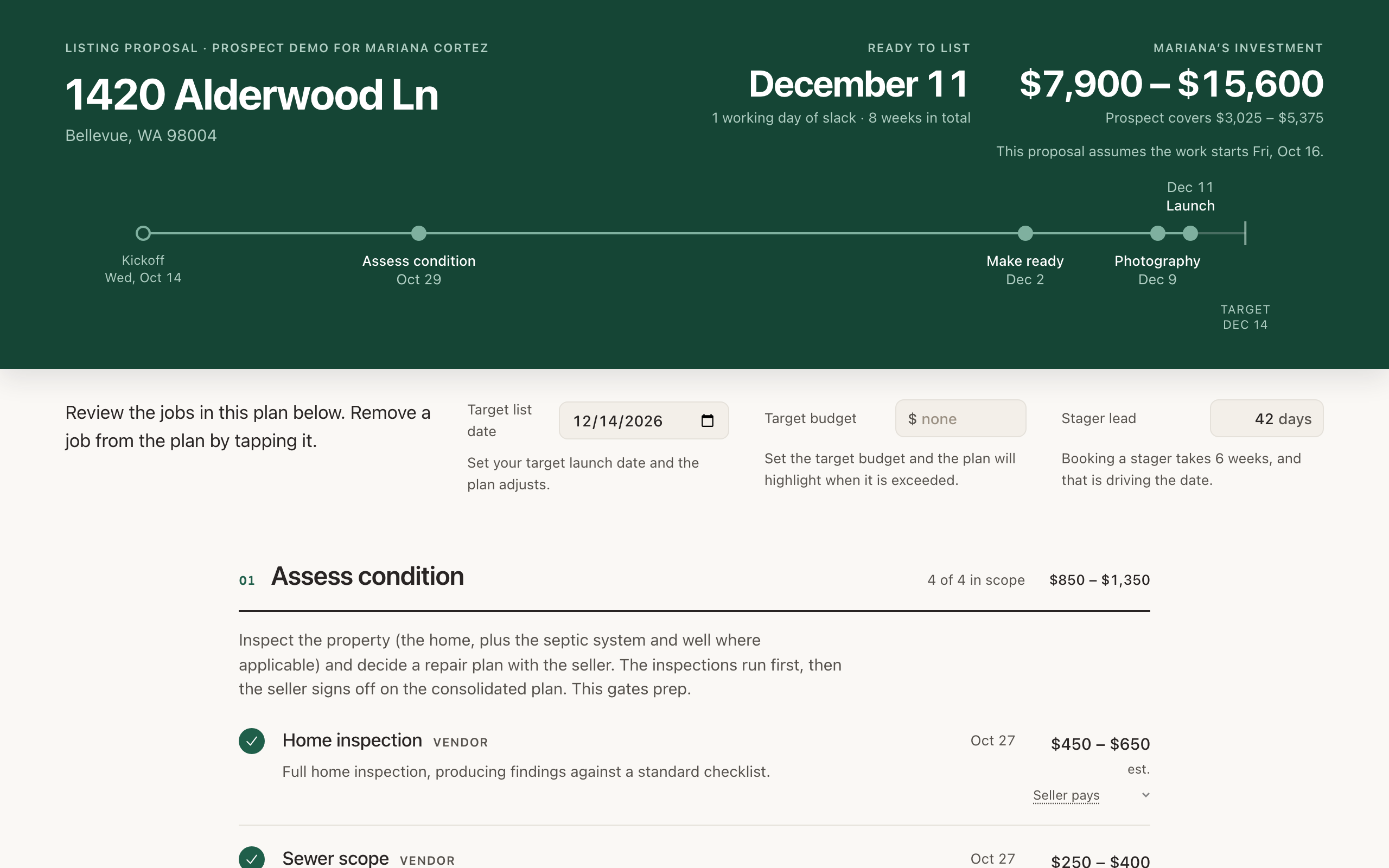
Wishfleet turns each walkthrough into a prep plan with the work, an estimated cost, and a projected list date. Agents present it to win the listing, and the whole team runs the same plan through launch.

2451 Broadway E
One plan, from walkthrough to launch.
- Scope
- Quotes
- Decisions
- Dates
Most listing presentations show the price, not the plan. Sellers get a generic deck, not the work, the cost, and the date for their home. After signing, the plan lives in agents’ texts, and coordinators piece it back together on every listing.
Win the listing with a plan. Deliver it with Wishfleet.
-
01 · Plan
Walk in with the vision and the numbers.
Turn the walkthrough into a plan to get the home market ready, with recommended work, estimated costs, and a projected list date.
-
02 · Present
Show sellers how you’ll make it happen.
Walk the seller through the plan and help them choose the work their budget covers. The cost and the list date update as you add or cut work.
-
03 · Deliver
Put the plan into motion.
Wishfleet’s virtual coordinator asks the vendors you trust for comparable quotes and keeps the work moving through launch. You and the seller make the decisions.


What changes for your team.
Win more listings
Every agent walks in with a plan.
Agents show the seller the work, the cost, and the list date for their home, not a generic deck.
Deliver consistently
One process from walkthrough to launch.
Keep the scope, quotes, seller decisions, and dates with the listing, no matter which agent or coordinator is running it.
Support your coordinators
Coordinators keep up as listings grow.
Routine vendor follow-up and status updates are handled, so coordinators spend their time moving listings forward.
Who it’s for
One plan for everyone running the listing.
Help agents arrive with a clear vision, then use the same plan to keep delivery consistent across the team.
Wishfleet for team leads › Managing Brokers and Owners One way to run listing prep across the office.Agents and coordinators work from the same plan on every listing, with the scope, decisions, and current status kept with the listing.
Wishfleet for brokerages › Listing Coordinators Run every listing from one clear plan.Keep scopes, quotes, schedules, and seller approvals together, so less time goes into piecing together updates from texts and email.
Wishfleet for coordinators ›Put a winning plan in every agent’s hands.
We set up a limited number of teams at a time and run their first listings alongside them. Request access now to be ready before the spring listing season.